
How to Run a Door: A Playbook for an Easy Event Night
The door is the first thing attendees experience and the last thing most organizers plan correctly for. A smooth entry sets the tone for the whole night and helps make attendees feel low stress as well as being properly welcomed. However a stalled line can undo months of promotion before anyone gets inside and give clients bad vibes. The fix isn't more staff or more stress but it's a simple playbook that everyone at the door should know before it opens.
Picture a 500 person club show, doors open at 10. Presale went really well, the guest list grew all week, and the opener's friends are all arriving in one wave. The next thirty minutes decide whether the room fills with people in a good mood or people who spent half an hour out in the cold. Here are the top six ways to win them.
Walk the entrance before doors open
Walk the exact path an attendee will take in order:
- Start at the street. Could a stranger tell where the line forms and where the door is?
- Follow the line path and look for pinch points: parked cars, a merch table, a doorway that narrows right where people bunch up, or even a blind corner.
- Stand at the scan point. Is there light? Is there room for someone to step aside without blocking the lane?
- Walk the first ten feet inside. If people stop dead to get their bearings or if there is a bar right when they walk in, the entry backs up behind them no matter how fast you scan.
- Fix what you can and have staff help with the flow on things you can't fix.
A clearly marked sign that says "General Admission" or "VIP Only" placed well before the scan point does more for line speed than an extra staffer at the front.
Give every person one job
Doors fall apart when one person is scanning, answering questions, trying to check IDs, doing security, and working the guest list at the same time. Assign single jobs: scanners scan, security answers questions and checks IDs, and a floater can handle anything unusual.
For the full role by role breakdown and a briefing template, see staffing your event.
Split the line by what people need
One line for everyone means everyone waits on the slowest case. Where space allows, split the flow: scanned tickets in one lane, guest list check-ins in another, questions and walk-ups off to the side. Even a single rope and a handwritten sign separates the fast majority from the few who need time.
Digital delivery makes the fast lane genuinely fast. Nrby tickets arrive by email, in the app, and in Apple or Google Wallet, and staff scan QR codes in real time, so the common case takes seconds. If scanning is new to you, start with the QR ticket scanning guide.
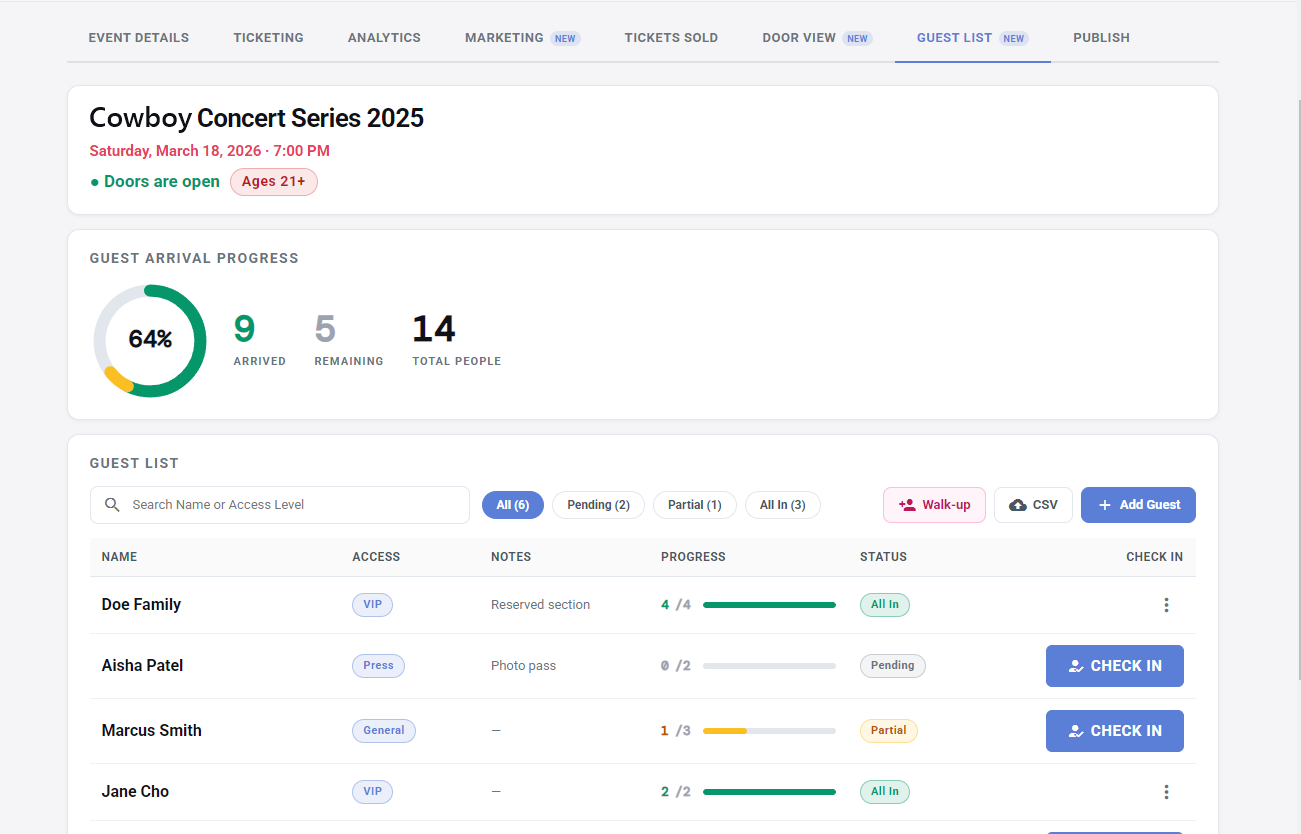
The guest list gets the same treatment: check-ins run from their own screen, with live arrival progress and party sizes, so the list never borrows time from the ticket scanning. Each are available with the touch of a button instantly.
At the door ticket purchasing is fast and easy with Nrby Events and splitting that into another line will help but isn't necessary. For smaller events a single person is able to manage all ticket flows.
Run the night from one screen
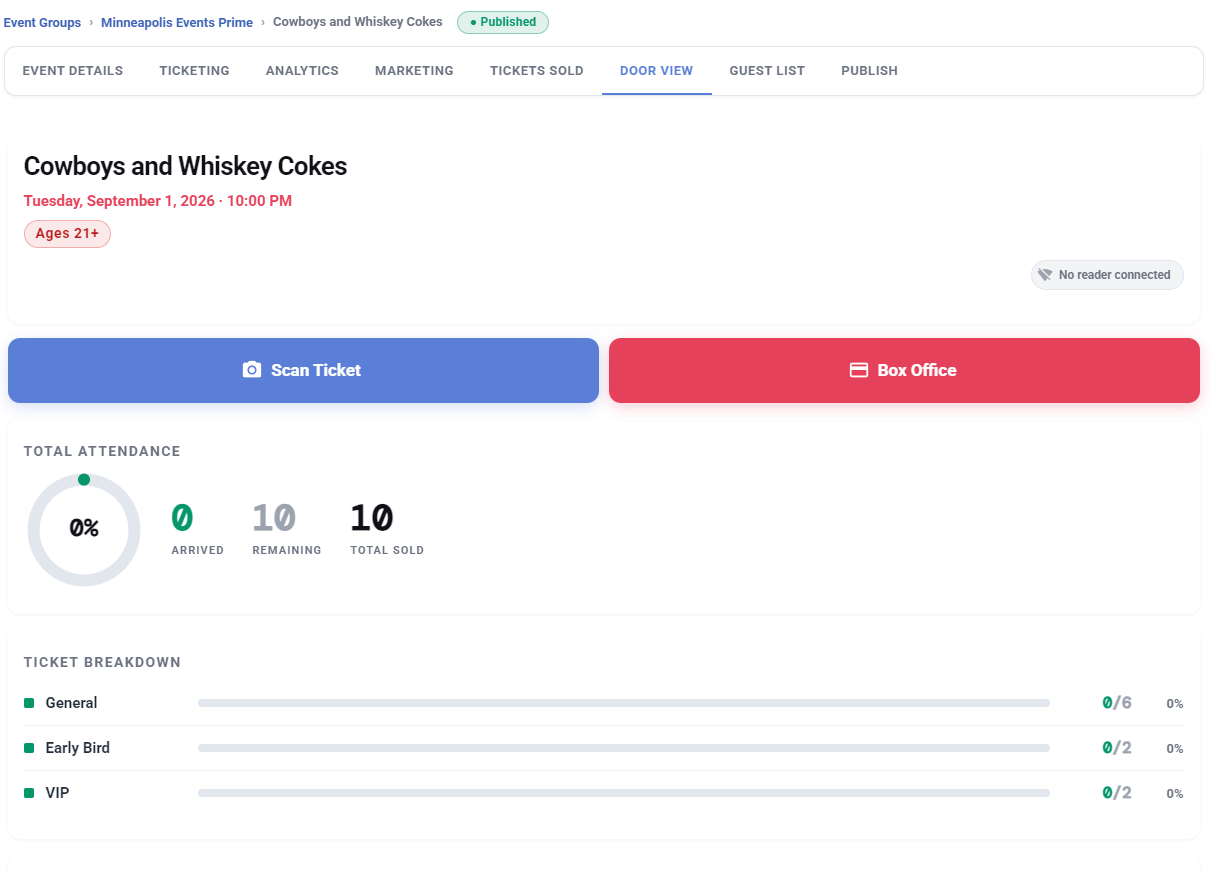
Every phone at your door can open Door View in the Nrby portal: a big Scan Ticket button, a live attendance ring showing checked-in against sold, and a per ticket type breakdown so you can watch GA fill while VIP trickles in. When staff asks "how's the room?", you answer with a real number and not a guess. The full tour is in Door View: your event night in real time.
Decide the edge cases in advance
Every door meets the same handful of edge cases: a ticket that won't scan, a name missing from the list, one person holding tickets for a whole group. Decide the answers before doors open and write them down. Who has the authority to let someone in? Who is allowed to say no? Where does a disputed case wait so the lane stays moving?
A simple rule can save you from bigger problems later: have clients step aside so the line keeps moving. A single unresolved case should be addressed quickly but never hold up a line of people ready to get inside.
Keep the line informed
People tolerate waiting far better when they know what's happening. Post set times at the entrance, announce delays on socials instead of hoping nobody notices, and have the greeter walk the line reminding people to pull the tickets up on their phones. Silence can turn a short wait into a big complaint; a little information goes a long way to ensure customer satisfaction.
Quick checklist
- Walk the attendee path an hour before doors... fix or sign every pinch point.
- Clear roles per person, and protect the main point of contact for attendees.
- Split lanes out when possible: ID check, ticket scans/guest list, and questions/walk-up purchases.
- Edge case answers written down with final authority known.
- Every door phone or tablet charged, signed in, and logged into Nrby Events.
- Set times or event info clearly posted where the line can read them.
The next step is to put this playbook somewhere it can work. If your event isn't set up yet, create it on Nrby. Real-time scanning and synced guest lists are built in so the door you plan on paper is the door your team actually has access to.
Interested in partnering? We can help!
Our team consults on your events — planning, ticket strategy, strategic partnerships, and best practices on running the event itself. Every new creator gets FREE personalized onboarding and help. Talk to a real person before you sell a single ticket.