Top Tips for Best Event Staffing: Who You Need at the Door
Most door disasters are just disguised staffing problems. The line can stall because one person is doing too many jobs. A guest list argument escalates because nobody knows who makes the final decision. The scanner device battery dies because nobody planned on charging it. Staff the door deliberately and most event night problems never get the chance to happen.
Which five roles matter most
Every door at any event, from a small show in a park to a massive festival, needs the same five functions covered:
- Scanner: checks tickets, keeps the lane moving, does nothing else.
- Door seller: helps attendees with ticket types, handles at-the-door payments, and keeps the line moving.
- Greeter: works the line, answers questions, directs people to the right lane.
- List handler: owns guest list check-ins, comps, party sizes, and walk-up additions.
- Lead: the decision maker who absorbs problems so the lines never stop moving.
At a small event one person can cover two of these, but be explicit about which two. The role you should never leave unassigned is the lead: when nobody owns problems, problems own the event.
For what it's worth, the scanner, door seller, and list handler's jobs have gotten much lighter. With Nrby Events there are simple and easy ways to scan tickets, sell tickets, and have a live list for guests. There are party-size counters and access levels on every name on the guest list, so it's only a few taps per guest instead of clipboard archaeology; the setup is in the guest list guide.
Match headcount to arrival surges and not just attendance
Doors aren't busy all night; they spike in waves based on the event type. Staff for the surges and not just the average. A useful rule of thumb is one scanner per entry lane, a greeter whenever a line forms at all, and a second lane that opens before the first one backs up. Late arrivals generally thin out quickly so plan for some door staff to roll onto other jobs mid event instead of standing around.
Running multiple gates across a festival site repeats the same roles per gate, at which point scheduling becomes its own project; the festival guide covers scaling up.
Brief the team before doors open
A ten minute briefing before doors beats an hour of improvisation afterwards. There are four things to cover:
- The layout: lanes, signage, and where problem cases move aside.
- The decisions: what happens with a failed scan, a missing name, or a group on one ticket order. They should be decided now rather than in the moment.
- The authority: who can say yes, who can say no, and how to get ahold of them.
- The channel: a group text thread or radio, confirmed before the first attendees arrive.
Put it together and send it to everyone. Staff who already know the answers don't queue up behind you all night with questions. For the decisions themselves, the event-night troubleshooting guide is a ready made list to use right now.
Give a small team the same view
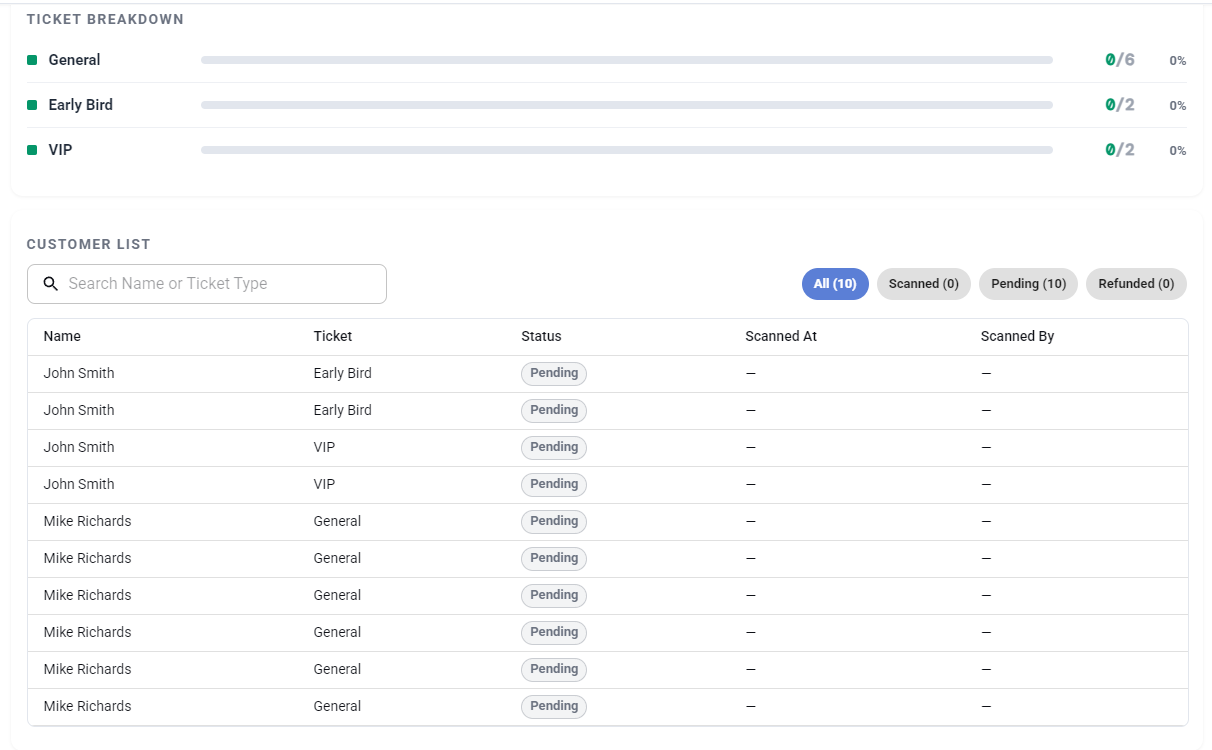
The classic small team failure is when vital information lives in one place, whether that's on a clipboard or in the organizer's head. Shared live tools fix this problem. With Nrby Events every staffer scans tickets from their own phone and guest list check-ins sync instantly to every device, so the person on door two always knows what door one just did. Since every scan or check-in is saved with a chain of custody showing who accepted it and when, you get accountability without hovering; if a question comes up later you have a record that answers it.
Quick checklist
- Five roles assigned by name and doubled up deliberately if the team is small.
- Roles named so everyone knows who does what.
- Share a brief with the team: layout, decisions, authority, & channel.
- Phones charged and signed in with battery packs staged.
- Surge plan agreed: what time an extra lane opens and who staffs it.
The next step: write up your door plan and then give it to your team. When you create your event on Nrby, set your staff up with scanning and the live guest list, brief them once, and spend event night watching the show at a high level instead of just working the door.
Interested in partnering? We can help!
Our team consults on your events — planning, ticket strategy, strategic partnerships, and best practices on running the event itself. Every new creator gets FREE personalized onboarding and help. Talk to a real person before you sell a single ticket.