7 Event Planning Mistakes to Avoid
Most event planning mistakes aren't exotic. The same handful sink events over and over, and every one of them is avoidable if you plan for them. Here are the seven that do the most damage, in the order you're likely to meet them.
Before you announce
1. Planning without a timeline. Deadlines hide behind every decision, and without a written plan they all surface at once in the final two weeks. Build a reverse timeline from event day backward before you book anything. It takes only a couple hours and saves the month.
2. Booking the venue before defining the audience. The room should fit the crowd, not the other way around. Decide who the event is for and how many you can realistically reach, then choose a space that number fills comfortably. Plenty of fun and enjoyable 200-person events have been made to feel like a failure by an oversized 500-capacity room. Control the dead space in the event venue to increase the feeling of event excitement.
3. Budgeting expecting a sellout. If your financial plan for the event only works at full capacity, it's not a plan, it's a bet. Budget against a conservative sales scenario, know what your breakeven ticket count is from day one, and keep a contingency line for any surprises.
While tickets are on sale
4. Announcing once and going quiet. A single announcement reaches whoever happened to be looking that day. Promotion needs scheduled waves, each with its own reason to buy now: the announcement, a mid-cycle push around a lineup, artist, or venue reveal, and a final 72-hour push for everyone who kept meaning to get tickets.
5. Making people work to buy a ticket. Every extra click, every confusing option, or unclear price costs you buyers who were ready to pay. Picture someone seeing your post while they wait in line for coffee: either they've got a ticket before they reach the register, or they've forgotten your event by dinner. Keep the path from interest to ticket short. Nrby Events helps simplify the buying process and reduces button presses for a customer to buy a ticket down to 11 clicks...industry-leading for ease of use.
On event night
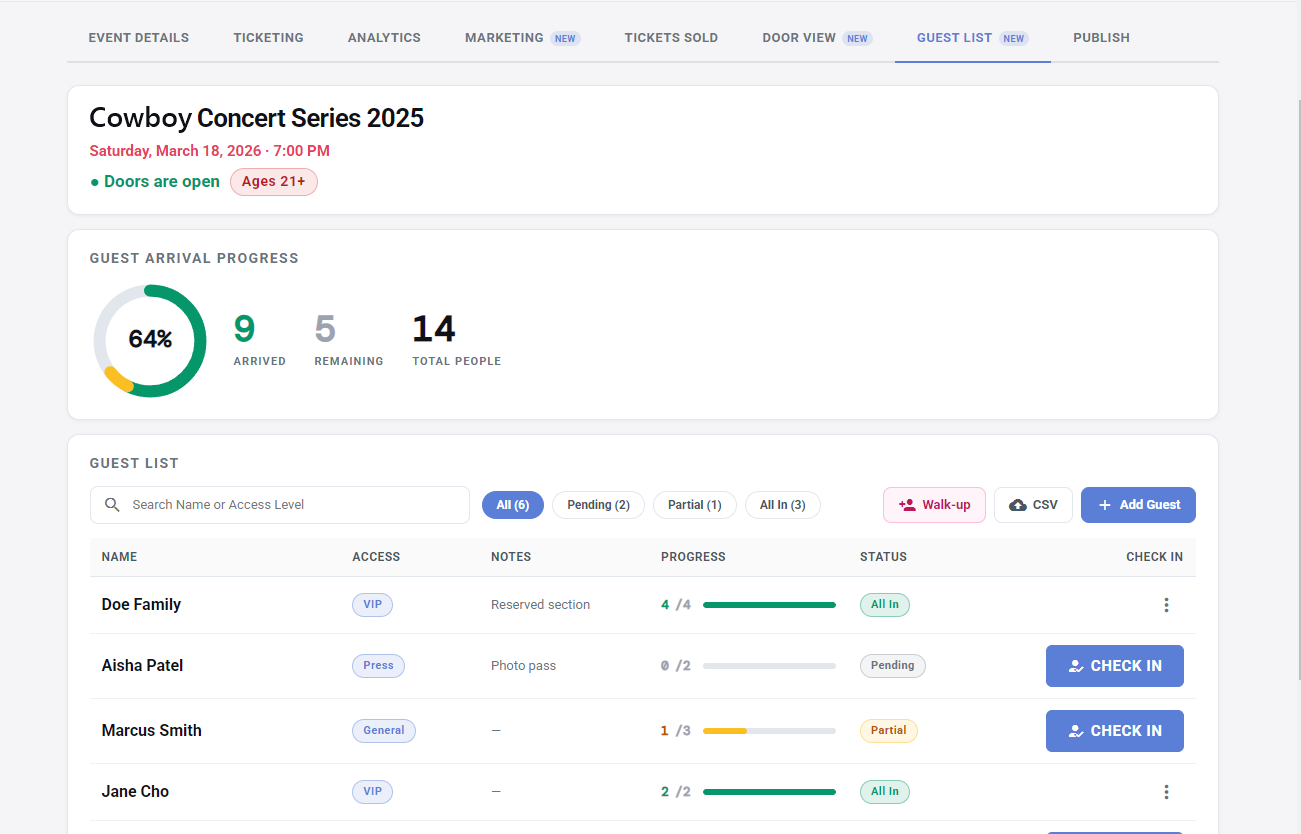
6. Understaffing the door. The door is where every attendee forms a first impression, and it's where problems can concentrate. Customers with lost tickets, guest list name mix-ups, walk-up sales, and many questions. Tools remove most of the fumbling; real-time QR scanning and guest lists that sync instantly to every staff member keep the line moving, but someone still has to manage the door and have the authority to make calls. Who you need at the door breaks down the roles.
7. Having no plan for things going wrong. Weather, a no-show staffer, a broken speaker, a medical issue. You can't predict which one you'll get, only that whatever can happen, will happen. Decide in advance who makes decisions on the night and what the fallback is for your three most likely failures. When event night goes sideways walks through the common scenarios.
The pattern behind all seven
Every mistake on this list comes from compressing decisions into the final stretch, when options are gone and the risks are high. The fix is the same in every case: decide earlier and make a plan. Early decisions are cheap, reversible, and made with a clear head. Late ones are expensive and forced.
Quick gut-check
Run your current plan against this list:
- Written timeline, working backward from the date
- Audience defined before the room was booked
- Break-even known, contingency set aside
- At least three promotion waves on the calendar
- Ticket link tested on a phone, start to finish
- Door owned by a named person with real authority
- Fallbacks written for your three likeliest failures
If any line makes you wince, that's the one to fix this week. The wince is the point of the list.
The best time to avoid all seven is before the announcement goes out. Start with the plan, then create your event and give yourself the runway to do it right.
Interested in partnering? We can help!
Our team consults on your events — planning, ticket strategy, strategic partnerships, and best practices on running the event itself. Every new creator gets FREE personalized onboarding and help. Talk to a real person before you sell a single ticket.