How to Pick the Perfect Date (and Time) for Your Event
You can change almost anything about an event after announcing it except the date. The right date quietly lifts attendance before you spend a thing on promotion, and the wrong one caps your ceiling no matter how good the event is. It deserves more than a glance at your own calendar.
Scan the landscape before you commit
Your competition isn't other ticketed events; it's everything your audience could do that night. Check for holidays, long weekends, school breaks, major sports fixtures, and festivals. The classic trap is picking a day that is already very competitive, for example the Saturday before Halloween when every organizer in town has quietly had the same idea.
Then look at your own scene. Browse what else is happening near you around your target dates, and avoid landing on top of something that shares your crowd. Two edm shows on the same Friday in the same neighborhood will both underperform, and neither organizer may know exactly why. Nrby Events provides a personalized predictive success score that helps event creators choose what the best day and time is based on all the other events occurring in a city.
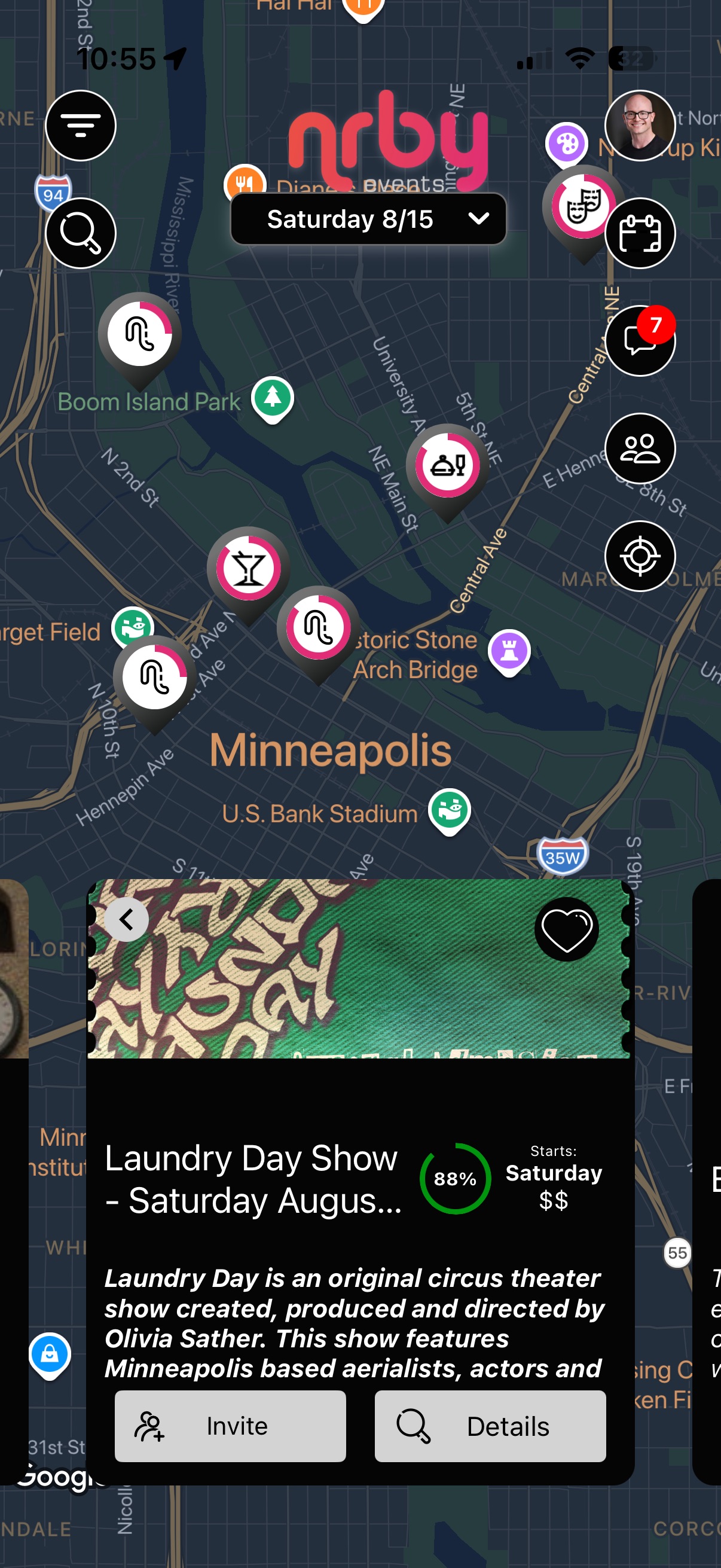
An underperforming event often traces back to a clash nobody checked for, so run the scan twice... once when you shortlist dates, and again just before you announce.
Match the day of the week to your audience
There's no universally best day, only the best day for your crowd. A few patterns hold up:
- Working professionals cluster around Thursday to Saturday.
- Student audiences bend those rules, near a campus a Tuesday can outdraw a Saturday.
- Family events favor weekend daytimes.
- Industry and networking events live on weekdays, when attending feels like part of the job. Stick to mornings or late afternoons around 4pm happy hour time.
Think about what the morning after looks like for your attendees; people commit differently when tomorrow is a workday.
Respect the season
Outdoor events carry weather risk in both directions: cold and rain hurt turnout, but so does competing with the first genuinely nice weekend of the year, when everyone already has plans that don't involve tickets. Indoor events often do better in the months when staying in is the default.
The season shapes the venue side as well: popular months book out earlier and negotiate less, while off peak dates often come with friendlier terms and more spaces to choose from. Daylight matters too so keep that in mind when thinking about how the photos of your event will look and how the whole feel of a venue change with the light.
Leave yourself enough runway
A great date three weeks away is usually worse than a good date ten weeks away. You need time to announce, build waves of promotion, and let social shares compound.
Before you commit, run the date through the event planning timeline backward and confirm you have enough runway. If it doesn't, take the later date. Nobody has ever regretted a few extra weeks of ticket sales.
Choose the time with the same care
Doors at seven and doors at nine produce different events with different crowds. Earlier starts suit weeknights, all ages audiences, and anything with a program; later starts suit weekend nightlife.
If the event is something that will repeat, keep the slot consistent so the habit can form, a recurring series is built on people knowing when to show up without checking.
Quick checklist
- Holidays, breaks, and big fixtures checked around the target date
- Use the Nrby Events research tool with predictive success score for guidance
- Local listings scanned for crowd overlap — twice
- Day of week matched to the actual audience instead of guessing
- Season and daylight considered especially outdoor events
- Enough runway for announcement, waves, and compounding interest
- Door time set realistically based on crowd and keep consistent for a series
Once a date survives these checks, commit to it and get it in front of people while the runway is long. Create your event and let the date start working for you.
Interested in partnering? We can help!
Our team consults on your events — planning, ticket strategy, strategic partnerships, and best practices on running the event itself. Every new creator gets FREE personalized onboarding and help. Talk to a real person before you sell a single ticket.