The 6 Best Ways for Promoting Your Event on Social Media With No Budget
We all know that paid ads can be effective when used correctly, however most rooms that fill up, fill up without a paid campaign. Organic social can do the whole job, if you post consistently where your crowd already hangs out...send every click to one place worth landing on and get other people talking about your event along with you. None of that costs any money. It just takes time and a plan you'll actually keep up regularly.
Pick the platforms your crowd already uses
Being everywhere is the fastest way to get nowhere. Choose one or two social platforms based on who the event is for. You can figure this out by building a persona of the ideal person coming to your event.
Picture three organizers. One runs a 200 cap club show: her crowd watches short video, so clips from past shows on Reels and TikTok do the heavy lifting. One runs a professional workshop: his buyers live on LinkedIn and actually open email. One runs a neighborhood art show series: she gets found through local groups, community pages, and the vendors' own followers. Same playbook, completely different platforms and each of them needs their own unique social plan because copying each other would only waste time.
Then you need to commit to a schedule you can sustain for the whole sales window. Three decent posts a week from announcement to event night beats just a launch day flurry of posts followed by six weeks of silence. Put the posting days in your calendar like shifts and try out a software solution that can schedule your posts beforehand.
Make one link do all the work
Every bio, post, and story should point to the same place: your event page. The post earns the click; the page sells the ticket so it needs the date, venue, ticket options, and a reason for the customer to care the moment it loads. If yours isn't there yet, start with building an event page that converts.
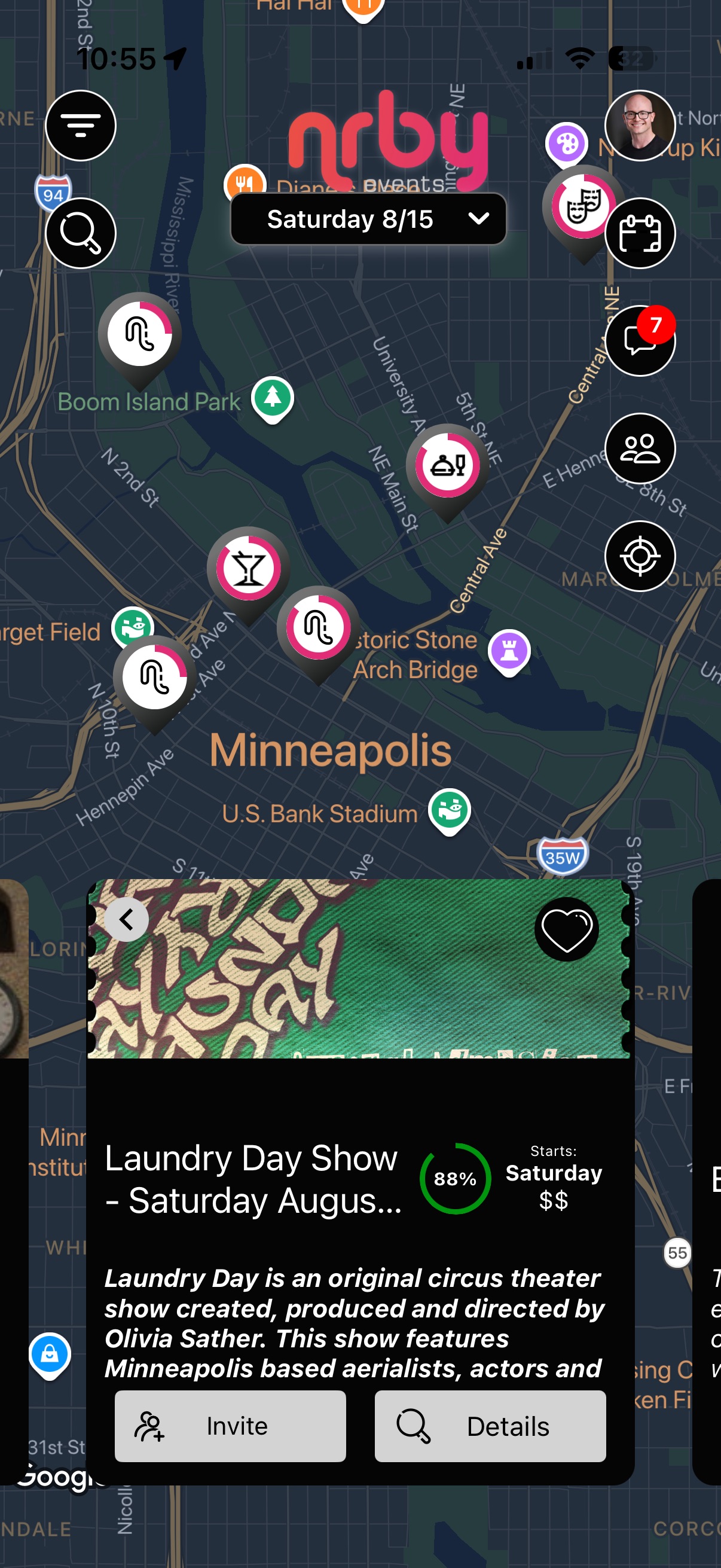
On Nrby Events, every event comes with a shareable page, and your public creator page collects your upcoming events, past events, socials, and unlimited custom links in one spot. Think of a supercharged Linktree with a link in bio that stays current and updates all your events automatically. Also, coming soon are marketing links for Instagram, Facebook, TikTok, X, and Google, each with its own short URL and downloadable QR code, each reporting views, orders, and ticket revenue. That's the difference between knowing which post got likes and knowing which platform sold tickets. The full rundown is in Marketing Links and QR Codes.
Post like a person and not a billboard
"Tickets on sale" is a post, not a strategy. Give people the story of the event as it comes together in real time:
- Start with the announcement, the strongest single image you have
- Behind the scenes prep: people like to see the process
- Reveals: lineup, speakers, vendors, specials, or activations...show them one at a time to help build interest
- People: introduce talent, staff, and any special guests who make it what it is
- The countdown: build FOMO as the date gets closer
Before you post anything, ask one question: would you share this with a friend if you saw this online? Shares are the only reach you get for free so make each post or reel memorable and worth forwarding.
Design moments people want to remember
Your attendees are the content team you're not paying and they'll work hard if you give them something worth pointing a phone at. Build four or five moments into the event with purpose:
- A photo spot that isn't just a sad banner: an arch, a lit sign, a wall with the event name somewhere the light is actually good
- A moment in time that passes: a big entrance from the headliner, an artist making art live, special dancers or acrobats...things people film because they only happen in that moment
- A detail that feels personal: the drink named for the headliner, a polaroid station, a painting that people at the event can draw or write on
You have to make it easy. Put the photo spot near the flow of traffic but not in a bottleneck, add small signage with your social tag, and tell staff to offer to take photos. Every tagged story is a personal endorsement sent to exactly the people most likely to come next time and while it's happening it will be reshared in real time.
Recruit the people who are already invested
Performers, speakers, vendors, and the venue all want a full room as much as you do. Most will promote if you make it effortless: send the link, get them a promo code, and suggested copy, then ask for something specific: "post Thursday when the lineup drops" works far better than "help us spread the word."
Give each of them their own named link or coupon code and you'll also learn who actually drives sales, not just who posts. The full playbook is in affiliate links that sell.
Treat the last week as a countdown
Close the window with intent instead of repetition: daily stories, one clear final call to action post, and reshares of real buzz from attendees and performers. It's the kind of proof no ad can fake. Say plainly when sales end for a tier. The last week deserves its own plan.
Quick checklist
- One or two platforms, chosen for your crowd, see what is working for this type of event
- A posting schedule you can keep up all the way to event night
- Every link pointing at one event page that converts
- A named link per platform, so you know what's selling (coming soon)
- At least four moments designed to be recorded
- Partner kits sent with a specific ask and a date
- A final week countdown planned before you announce
The best time to build the habit is before the announcement goes up. Create your event, get the page right, and plan the posts backward from event night.
Interested in partnering? We can help!
Our team consults on your events — planning, ticket strategy, strategic partnerships, and best practices on running the event itself. Every new creator gets FREE personalized onboarding and help. Talk to a real person before you sell a single ticket.